AI overview
A commercial solar inverter turns the DC power from your panels into AC power your business can use, and it handles safety shutdown and the data behind your monitoring. Most Gold Coast commercial sites run on three-phase power, so they need a three-phase inverter. A string inverter suits most rooftops; a hybrid inverter is worth it if a battery is likely in the next few years. Inverters work harder than the panels, so local warranty support and live monitoring matter as much as the price.
Key highlights
- The inverter converts your panels' DC power into the AC power your business runs on
- Most commercial premises have three-phase power and need a three-phase inverter
- A string inverter suits most rooftops; a hybrid inverter saves an upgrade if a battery is coming
- Inverter size is matched to the panel array, your supply and your network approval
- Inverters are the part most likely to be replaced, so local warranty support matters
- Live monitoring catches a fault in days, not when the next power bill arrives
Summarise with AI
Open this article in your favourite AI assistant for a quick summary and a local recommendation.
Most of the attention in a commercial solar quote goes on the panels. The inverter gets a line with a brand name and not much else, even though it is the part doing the most work.
It is also the part most likely to need replacing during the life of the system. Choosing it well affects how much power you get, how quickly you hear about a fault and what you can add later.
What a commercial inverter does
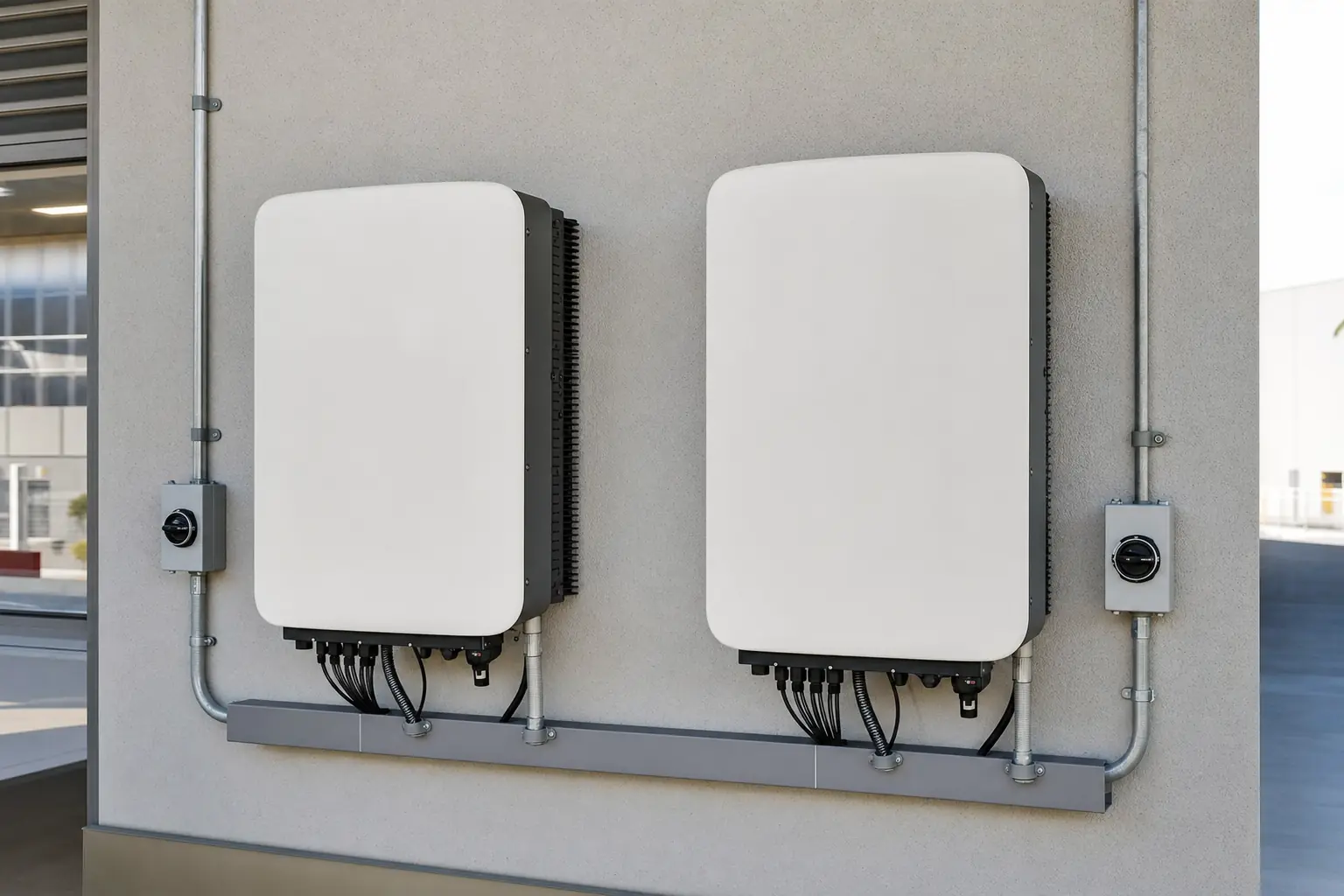
Solar panels produce direct current (DC). Your lights, air conditioning, refrigeration and machinery run on alternating current (AC). The inverter converts one to the other, all day, every day the sun is up.
It also shuts the system down safely if the grid goes off, so no power is pushed back into lines that workers may be repairing. And it records what the system produces, which is the data your monitoring app shows you.
String or hybrid
A string inverter takes the power from rows of panels wired together, called strings, and converts it in one unit. On most commercial rooftops that is the best value, and it is what most systems on the Coast use.
A hybrid inverter does the same job and can also charge and run a battery. If a battery is likely in the next few years, a hybrid now usually costs less than replacing a string inverter later. If storage is not on the cards, a string inverter is the sensible choice.
- No battery planned: a string inverter
- Battery likely in the next few years: a hybrid inverter
- Battery going in now: a hybrid inverter, or a separate battery inverter on a larger site
Three-phase supply
Most commercial premises have three-phase power, which is three supply lines instead of the single one most houses have. A three-phase inverter spreads the solar output across all three, which keeps your supply balanced and lets the system run larger loads.
Your switchboard tells us which supply you have. We confirm it during the site assessment, along with whether the board has room for the new connection or needs work first.
How big the inverter should be
The inverter is sized against the panel array, which our guide to how many solar panels a business needs covers in more detail. It is common to fit slightly more panel capacity than inverter capacity, because panels rarely produce their full rating in Queensland heat, and the extra panels lift output in the morning and late afternoon.
The network approval also sets a limit. Your electricity distributor approves how much the site can export, and on some sites that shapes the inverter choice as much as the roof does. A larger system often uses two or three inverters rather than one, which also means the rest keeps running if one needs repair.
Monitoring and warranty
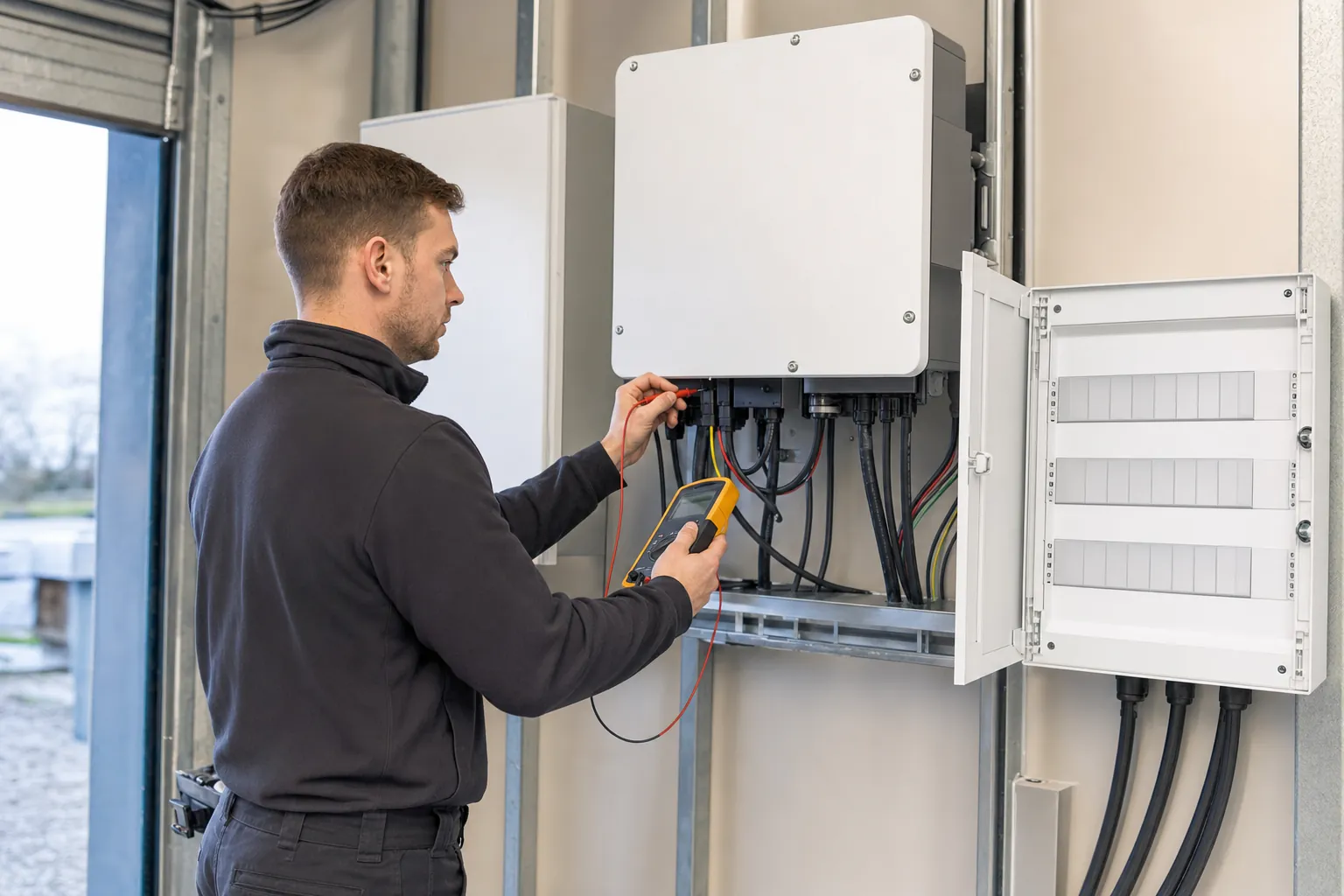
Commercial inverters commonly carry warranties of around 10 to 12 years, which is shorter than the panels, so plan for one replacement in the life of the system. What matters is how quickly a claim is handled when it happens, so ask who handles warranty claims locally.
Live monitoring shows what the system produces each day and sends an alert when something stops. We set it up on every commercial solar inverter we install. Without it, a tripped inverter can sit unnoticed until the next power bill, and on a commercial system that is weeks of lost savings.
Questions to ask about the inverter in your quote
A good quote explains why it chose the inverter, not just which one. These questions bring that out, and our guide to choosing a commercial solar installer covers the rest of the quote.
- Is it three-phase, and does that match my supply?
- Is it a string or hybrid inverter, and why for my site?
- How does its size compare with the panel array?
- What does the network approval allow this site to export?
- Who handles a warranty claim, and how long does it usually take?
- How will I see the monitoring, and who gets the fault alerts?
Frequently asked questions
What does a commercial solar inverter do?+
It converts the DC power from your panels into the AC power your business uses, shuts the system down safely if the grid goes off, and records the output your monitoring shows you.
Do I need a three-phase inverter?+
If your site has three-phase power, and most commercial premises do, a three-phase inverter keeps your supply balanced and supports a larger system. We confirm your supply at the site assessment.
Should I choose a hybrid inverter?+
If a battery is likely in the next few years, a hybrid inverter usually costs less than replacing a string inverter later. If storage is not planned, a string inverter is the better value. See our guide to what size battery a business needs.
How long do commercial inverters last?+
Quality commercial inverters commonly carry warranties of around 10 to 12 years and often run longer. They work harder than the panels, so plan for one replacement over the life of the system.
Can one system use more than one inverter?+
Yes. Larger commercial systems often use two or three inverters, which suits the roof layout and means the rest of the system keeps working if one needs repair. More on our commercial solar inverters page.