AI overview
The right number of solar panels depends on your roof space, daytime energy use and tariff, not just the size of your building. The goal is to self-consume as much solar as possible, because power you use yourself is worth far more than power you export.
Key highlights
- Size to your daytime usage, not your total bill
- Self-consumed solar is worth far more than exported solar
- A 30kW system is roughly 55 to 70 panels
- Roof space, orientation and shading all affect the count
- Future plans like EV charging change the right size today
- Over-sizing wastes capital, under-sizing leaves savings on the table
Summarise with AI
Open this article in your favourite AI assistant for a quick summary and a local recommendation.
It is tempting to think bigger is always better with solar, but the right-sized system is the one that matches how your business actually uses power.
Fill a roof for the sake of it and you end up exporting power for cents that you could have used yourself for far more.
Here is how installers work out the panel count, and why self-consumption is the number that matters most.
Start with your daytime usage
Solar only produces during the day, so the value of a system depends on how much power you use while the sun is up.
A business that runs hard from nine to five gets far more from solar than one that does most of its work at night, even with the same total bill.
That is why the first thing we look at is your load profile, not the size of your building.
Why self-consumption beats export
When you use solar power yourself, you avoid buying that power from the grid at full retail rate.
When you export it instead, you only earn a small feed-in tariff that is worth a fraction of what you pay to buy power.
That gap is why we size systems so you consume as much of your own solar as possible, rather than chasing the biggest array your roof can hold.
How your load profile changes the answer
Two cafes on the same street can need very different systems depending on when they are busy.
A bakery firing ovens from dawn wants different sizing to a bar that ramps up in the evening.
Your interval data shows the shape of your usage through the day, and that shape, more than the total, decides the right size.
- Morning-heavy: bakeries, gyms and early trades
- Steady all-day: offices, retail and childcare
- Afternoon and evening: hospitality and venues
- Around-the-clock: cold storage and some manufacturing
Rules of thumb for panel count
As a rough guide, a 30kW system is around 55 to 70 panels and suits many small-to-medium businesses.
Larger sites scale up from there, limited mainly by roof space, orientation and any shading from nearby structures.
Use these bands as a starting point, then refine against your actual usage.
- 10 to 30 kW: cafes, small offices and childcare centres
- 30 to 100 kW: retail, workshops and clubs
- 100 to 250 kW: cold storage and light manufacturing
- 250 kW and above: industrial sites and multi-site operators
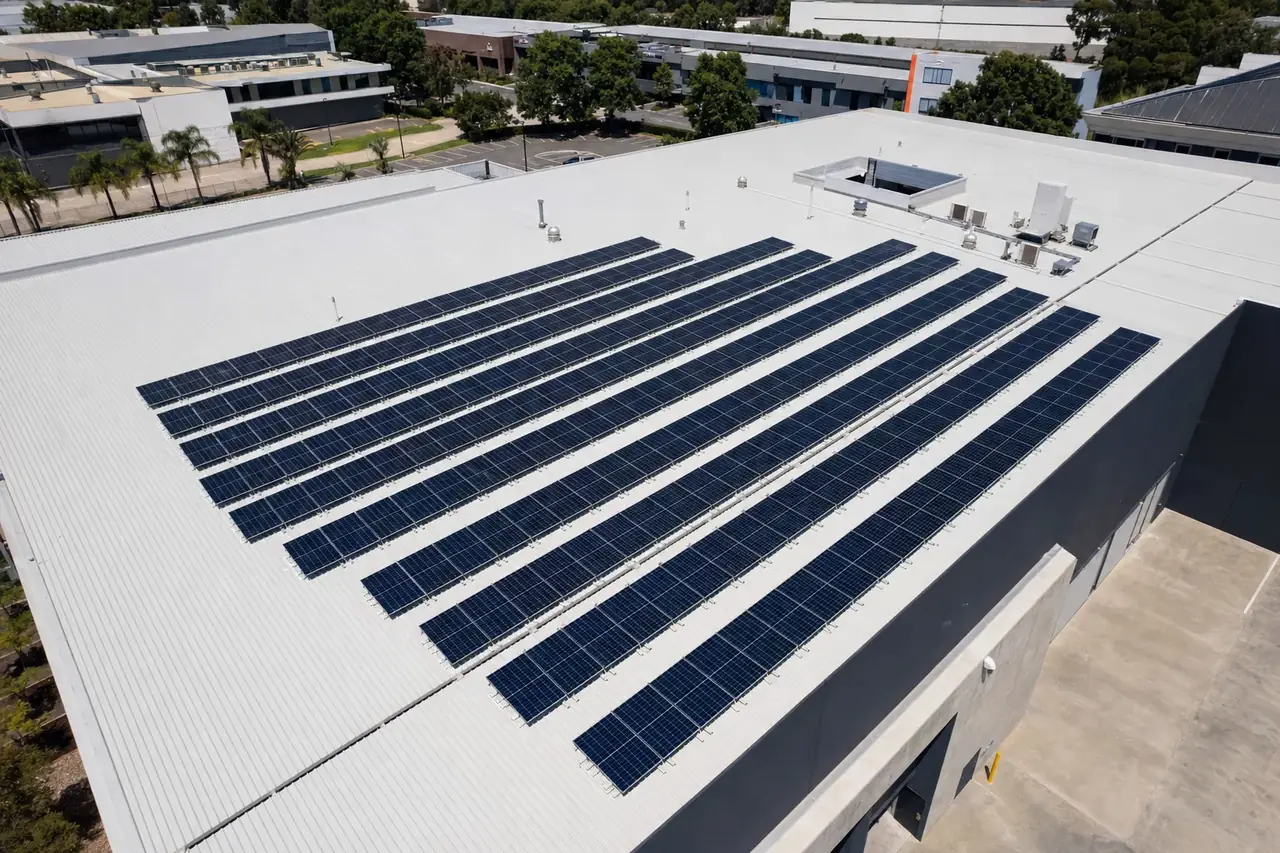
What roof space and orientation do to the number
Two businesses with identical bills can need very different systems depending on their roof.
A north-facing roof with clear space packs in more usable panels than a small, cluttered or shaded one.
We map the available area, work around vents and skylights, and angle the layout for the best year-round output.
Should you size for future growth?
If you plan to add equipment, expand trading hours or install EV chargers, the right size today is bigger than your current bill suggests.
It is often cheaper to install a slightly larger system now than to come back and expand later.
We ask about your plans up front so the system suits the business you are growing into, not just the one you have today.
- Adding refrigeration, machinery or a second shift
- Installing EV chargers for staff or a fleet
- Extending opening hours into the evening
- Adding a battery to use more of your own solar
Get it sized properly
The only way to land on the right number is to analyse your load profile and roof together.
We do that for every site, so your system is sized to your business rather than a generic template.
That assessment is the difference between a system that pays back fast and one that quietly under-delivers.
Frequently asked questions
How many panels is a 30kW system?+
Roughly 55 to 70 panels depending on panel wattage. We confirm the exact count for your roof during the assessment.
Should I fill my whole roof with panels?+
Not necessarily. The best system matches your daytime usage so you self-consume the solar. Over-sizing beyond that often just exports cheap power.
What if my business uses most power at night?+
Solar still helps, but the returns are lower without storage. We often pair a smaller array with a battery so you can use your solar after dark.
Does roof orientation really matter?+
Yes. North-facing arrays produce the most over a day, but east and west splits can suit businesses with morning or afternoon peaks. We design the layout around your usage pattern.
Can I add more panels later?+
Often yes, if the inverter and roof allow for it. It is usually cheaper to size correctly up front, so we factor your growth plans into the design.
How do you work out the right size?+
We analyse your interval data and bills to see when and how much power you use, then match the array to your daytime load and roof space.