AI overview
Choose a commercial solar installer by what the quote shows, not just the price. A good quote is based on your actual power use, shows the modelled savings and payback, names the panels and inverter, lists the certificate rebate as its own line, and explains the switchboard and network approval work. Check the installer is CEC accredited, uses licensed electricians, and can show commercial jobs of a similar size.
Key highlights
- Compare quotes on what they include, not the headline price
- A good quote is sized from your actual power use, ideally 12 months of interval data
- Look for modelled savings and payback before you sign
- The rebate should be a separate line, so you can see the assumption
- Ask who does the electrical work and the network approval
- Ask to see commercial jobs of a similar size
Summarise with AI
Open this article in your favourite AI assistant for a quick summary and a local recommendation.
A commercial solar system is a big purchase that should run for 25 years. The installer you choose decides how well it is designed, how smoothly it is approved and who answers the phone when something needs attention.
Quotes for the same building can vary a lot, and the cheapest is not always the best value. This guide covers what to look for, so you can compare quotes on what is actually in them.
Start with your power use, not the roof
A good commercial system is sized to how your business uses power through the day, not to how many panels fit on the roof. Panels that produce power when nobody is using it mostly export it for a low feed-in rate.
Ask your retailer for 12 months of interval data, which shows your use in 15 or 30 minute blocks. The savings calculator gives a first estimate while you wait for it. An installer who asks for it, or for your recent bills at least, is designing for your business rather than for the roof.
What a good quote shows
Put two quotes side by side and check each of these. Our guide to what commercial solar costs on the Gold Coast helps you judge the price. A quote that leaves several out is harder to compare, and harder to hold anyone to.
- System size, with the reasoning behind it
- Panel and inverter brands and models (see choosing a commercial inverter)
- Modelled yearly savings and payback, with the assumptions stated
- The certificate rebate as its own line, with the number of certificates (see our rebates guide)
- Switchboard work, metering and network approval, and who does them
- Warranty terms for panels, inverter and workmanship
- Monitoring, and who gets the fault alerts
Check the people doing the work
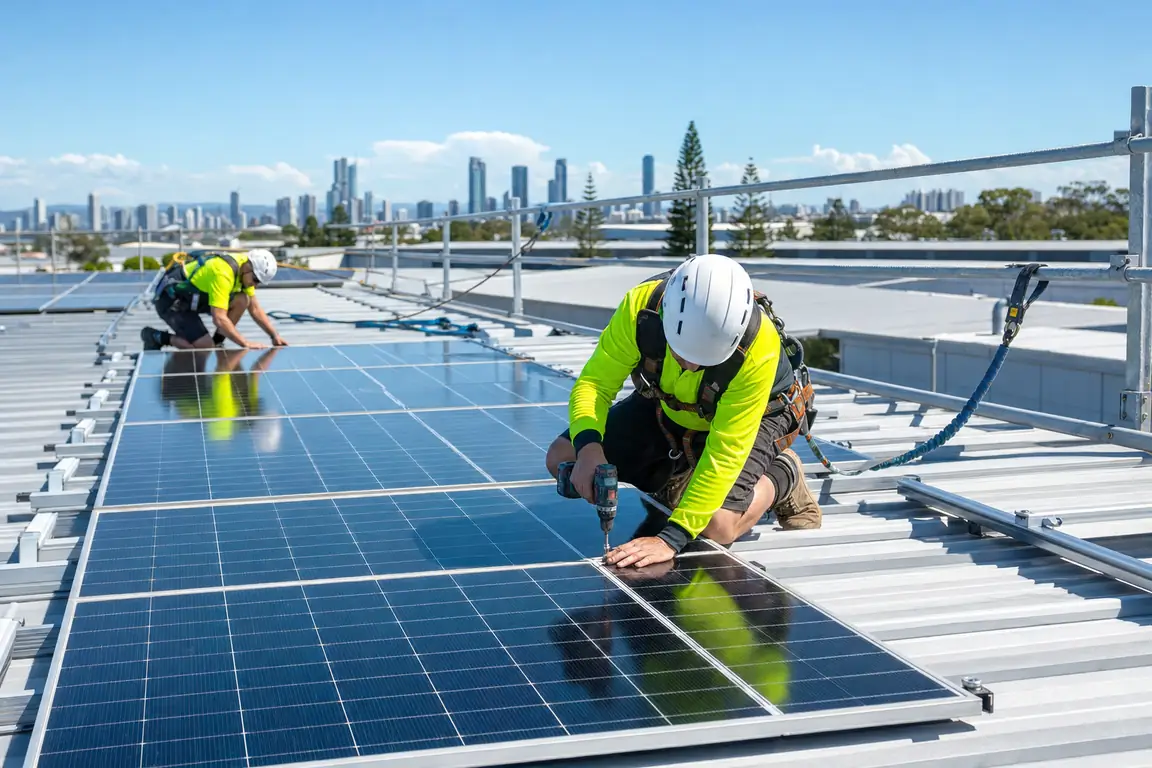
Commercial solar is mostly electrical work. Ask whether the installer is accredited with the Clean Energy Council (CEC), whether licensed electricians do the wiring, and who manages the network approval, the step that most often delays a commercial job.
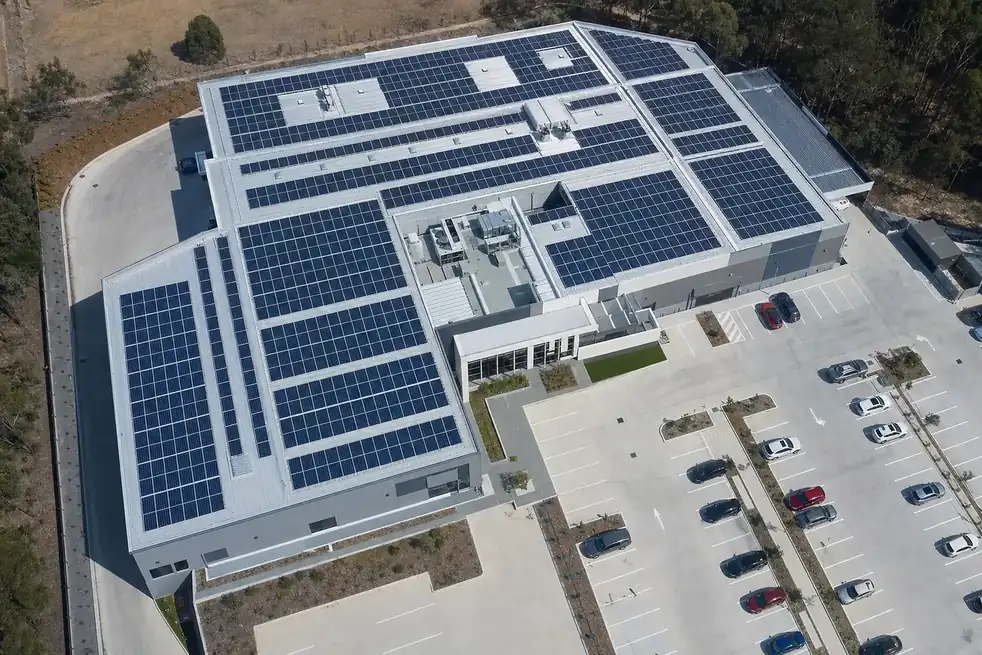
Ask to see commercial jobs of a similar size, not just houses, like the ones on our projects page. A 100kW system on a warehouse involves different approvals, switchboards and safety work from a 10kW system on a home.
Signs a quote needs a second look
None of these rules a quote out on its own. Each is a reason to ask more questions before you sign.
- A price per kilowatt with no design or savings model
- A savings figure with no assumptions behind it
- The rebate folded into the price with no certificate count
- No mention of the switchboard or network approval
- Pressure to sign quickly because of a deadline
- Warranty support that is handled interstate or by a third party
Paying for it
Ask each installer which ways to pay they offer. Buying outright gives the best long-term return, finance spreads the cost, and a power purchase agreement (PPA) puts a system on your roof with no upfront cost while you buy the power it makes.
Our guide to commercial solar finance options compares the three, and the savings calculator gives a first estimate for your site.
Frequently asked questions
How many quotes should I get for commercial solar?+
Two or three is usually enough, as long as each is based on your actual power use and shows the same things, so you can compare them line by line.
What accreditation should a commercial solar installer have?+
Look for Clean Energy Council (CEC) accreditation for the design and installation, and licensed electricians for the wiring. Ask who handles the network approval as well.
Is the cheapest commercial solar quote a bad sign?+
Not on its own. Check what it includes: the panel and inverter models, the switchboard work, the network approval and the warranty support. A low price that leaves those out often costs more later.
What information should I give an installer?+
Twelve months of interval data or power bills, your trading hours, any plans to add a battery or EV chargers, and access to the switchboard and roof for the site assessment.
How do I compare the rebate between quotes?+
Ask each quote to show the number of certificates and the value per certificate it has assumed. Our rebates guide explains how the certificate rebate works, including systems up to 1MW.