AI overview
Commercial solar on the Gold Coast is priced by system size, roof type and your energy use, not a flat rate. Most systems pay for themselves within a few years, and a Power Purchase Agreement (PPA) removes the upfront cost entirely by letting you buy the power instead of the hardware.
Key highlights
- Price is driven by system size, roof type, inverter choice and install complexity
- Most commercial systems pay back within a few years, then deliver near-free power
- Bigger systems usually cost less per kilowatt than small ones
- A PPA means $0 upfront, you buy the power at a fixed rate below grid
- Rebates and incentives can lower the cost, but they change, so treat them as indicative
- The only way to a real price is a site-specific assessment
Summarise with AI
Open this article in your favourite AI assistant for a quick summary and a local recommendation.
It is the first question every business owner asks, and the honest answer is that commercial solar is not priced like a product off a shelf.
The cost depends on how big a system your site needs, what your roof is like, and how you choose to pay for it.
This guide breaks down what actually moves the number, so you can read a quote and know whether it stacks up.
What actually drives the price
Commercial solar pricing comes down to a handful of factors that any good installer will work through before quoting.
The biggest is system size. A larger array costs more in total but usually less per kilowatt, because the fixed costs of design, approvals and getting a crew on site are spread further.
After that, the detail of your roof and your switchboard does most of the rest.
- System size in kilowatts and the number of panels
- Roof type and how complex the mounting is
- Inverter choice, whether string, hybrid or three-phase
- Switchboard upgrades or grid-connection works
- Cable runs and how far the array sits from the board
- Whether storage or EV charging is part of the job
Why bigger systems cost less per kilowatt
There is a fixed cost to any solar job that has nothing to do with the number of panels.
Design, engineering sign-off, network approvals and mobilising a crew cost roughly the same on a 30kW job as a 100kW job.
Spread those fixed costs across more panels and the price per kilowatt drops, which is why a larger system often delivers better value.
Where the money in a quote actually goes
A commercial quote is more than panels on a roof, and the parts you cannot see often matter most.
The hardware is one line, but design, electrical works and getting the system safely connected to the grid all carry real cost.
When you compare quotes, look at what each one includes, because the cheapest number sometimes leaves out the works your site genuinely needs.
- Panels, mounting rails and the inverter
- Engineering, design and electrical safety certification
- Switchboard upgrades and metering changes
- Network connection application and approval
- Scaffolding, access and safe working at height
- Commissioning, monitoring setup and handover
What payback should you expect?
Rather than fixate on the sticker price, the operators who get this right look at payback: how long until the savings cover the cost.
Most commercial systems on the Gold Coast pay for themselves within a few years, helped by strong Queensland sun and the fact that businesses use most of their power during daylight hours.
After payback, the power the system produces is effectively free for the rest of its 25-year-plus life.
How a PPA removes the upfront cost
If tying up capital is the sticking point, a Power Purchase Agreement changes the equation entirely.
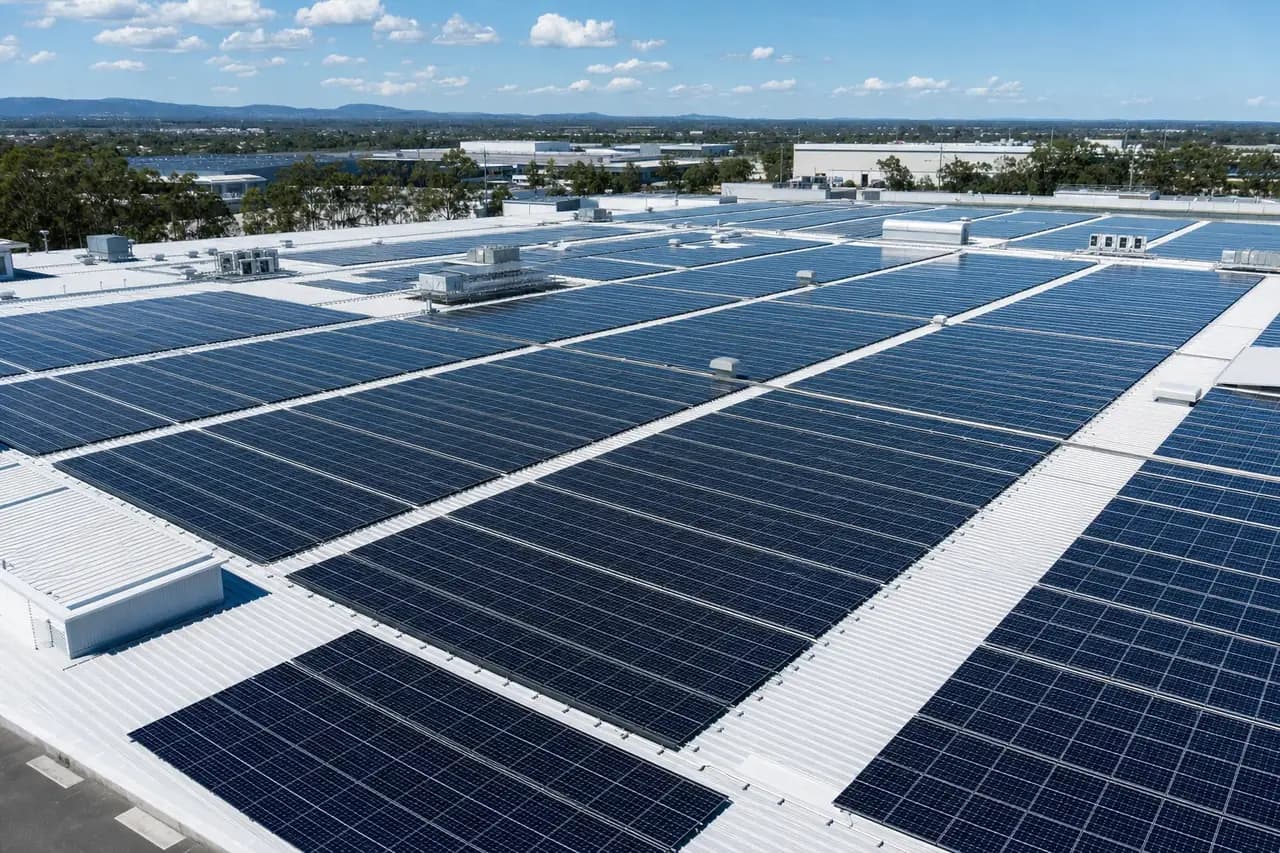
Under a PPA we fund, install, own and maintain the system, and you simply buy the power it generates at a fixed rate that is usually below grid.
There is no upfront cost and no maintenance bill, which is why a PPA is often the easiest yes for a business watching its cash flow.
What about rebates and incentives?
Government incentives can lower the cost of a commercial system, but they change from year to year and depend on your system size and timing.
Treat any figure you read online as indicative only, because the schemes re-tier regularly and what applied last year may not apply now.
Anything to do with tax treatment or depreciation should go to your accountant, who can tell you what your business can actually claim.
Getting a real number for your site
Any honest price needs a look at your bills, your roof and your daytime usage.
That is why we model every system on real data before quoting, so the figure you see is grounded in your site, not a generic estimate.
If a quote arrives without anyone looking at your power bills or your roof, be wary of it.
- Your last few power bills, ideally with interval data
- Roof type, age and available unshaded space
- Your daytime versus overnight usage split
- Any plans to add equipment, refrigeration or EV charging
- Whether you want to own the system or fund it through a PPA
Frequently asked questions
Is commercial solar cheaper per kW at larger sizes?+
Generally yes. Fixed costs like design, approvals and crew mobilisation are spread across more panels, so the cost per kilowatt usually drops as the system gets bigger.
Can I avoid the upfront cost entirely?+
Yes, with a PPA. We fund and install the system and you buy the power it produces at a fixed rate, so there is no capital outlay and you save from day one.
How long until a commercial system pays for itself?+
Most Gold Coast systems pay back within a few years, especially businesses that use a lot of power during daylight hours. The exact figure depends on your usage and tariff.
Do rebates make a big difference to the price?+
Incentives can lower the cost, but they change regularly and depend on your system size and timing. We factor in what currently applies and keep our figures indicative until it is confirmed.
Why do quotes vary so much between installers?+
Different panel and inverter choices, mounting systems and switchboard works all move the price. A cheap quote sometimes skips the works your site actually needs, so compare the scope, not just the number.
Should I wait for prices to drop further?+
Every month you wait is a month of grid bills you could have offset. The savings start the day the system switches on, so the cost of waiting is usually higher than any future price drop.