AI overview
Commercial solar works on almost every roof type, including Klip-Lok and trapezoidal metal, tin, concrete, tilt-up and membrane roofs. Where a roof is not ideal, tilt frames or ground mounts provide an alternative. The roof mainly affects the mounting system, not whether solar is viable.
Key highlights
- Metal (Klip-Lok, trapezoidal) and tin are the easiest to mount
- Concrete and tilt-up roofs use ballasted or fixed mounting
- Membrane roofs need careful, leak-proof mounting detail
- Tilt frames optimise flat-roof angles for more output
- Roof age and structure matter as much as roof type
- Ground mounts work where roof space is limited
Summarise with AI
Open this article in your favourite AI assistant for a quick summary and a local recommendation.
One of the most common worries we hear is whether a particular roof can take solar. In almost every case, the answer is yes.
The roof type mainly changes how we mount the system, not whether it stacks up financially.
Here is a run-through of the roofs Gold Coast businesses actually have, and how solar attaches to each.
Metal and tin roofs
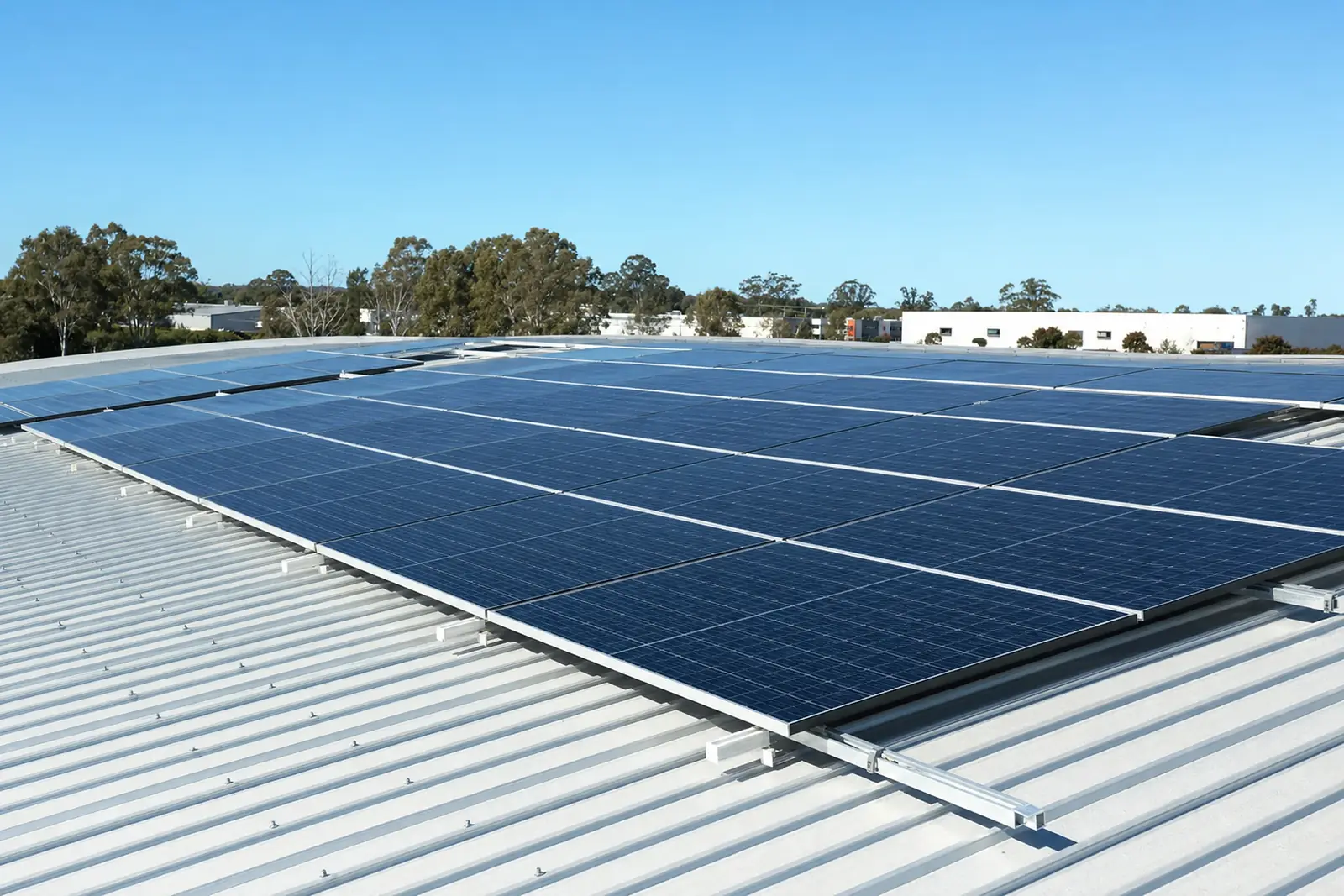
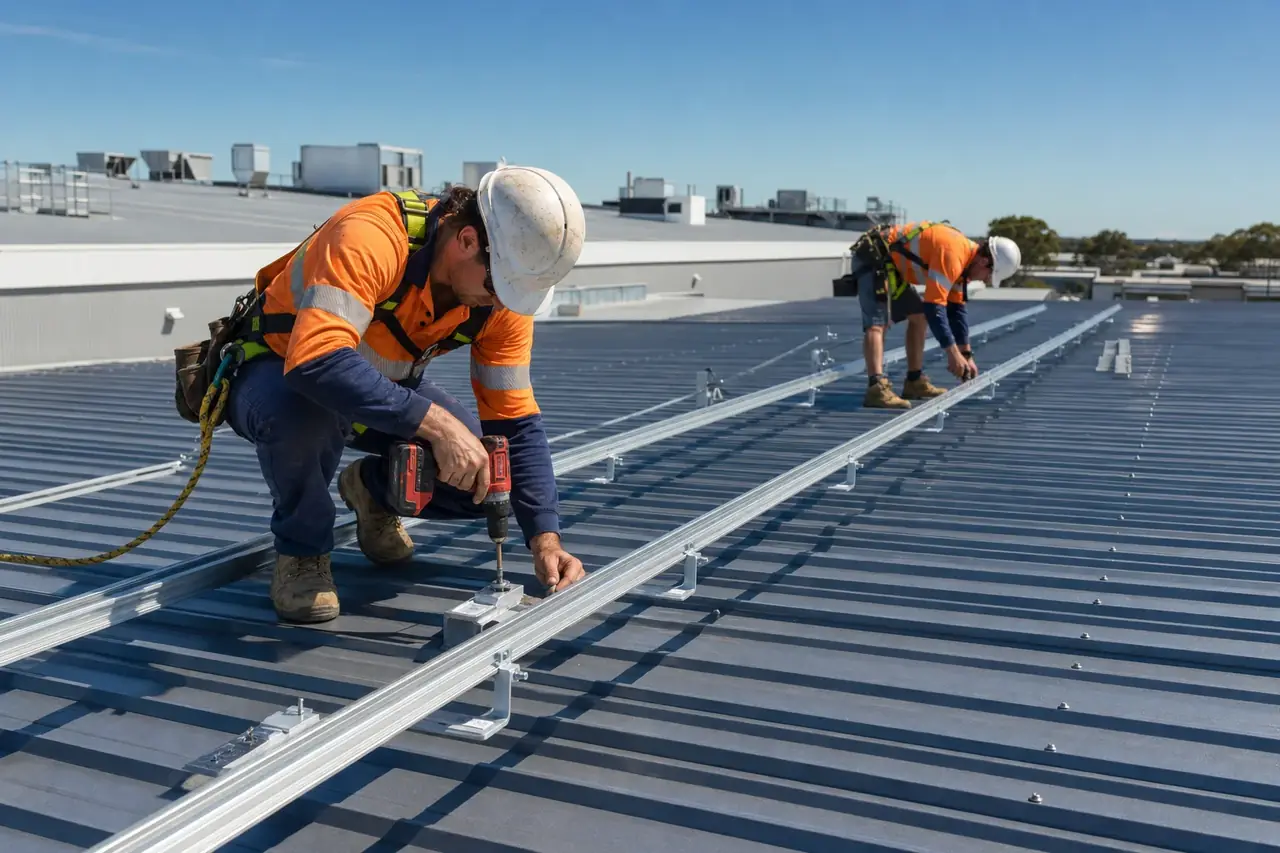
Klip-Lok, trapezoidal and standard tin roofs are the most common on commercial buildings and the easiest to mount to.
Clamps or brackets fix to the roof sheets without penetrations in many cases, making for a clean, fast install.
Where penetrations are needed, they are sealed and flashed to stay weatherproof for the life of the system.
- Klip-Lok: clamps grip the standing seams, often penetration-free
- Trapezoidal: brackets bolt through with sealed, flashed fixings
- Standard tin: proven, low-cost mounting that suits most sheds and workshops
Concrete and tilt-up roofs
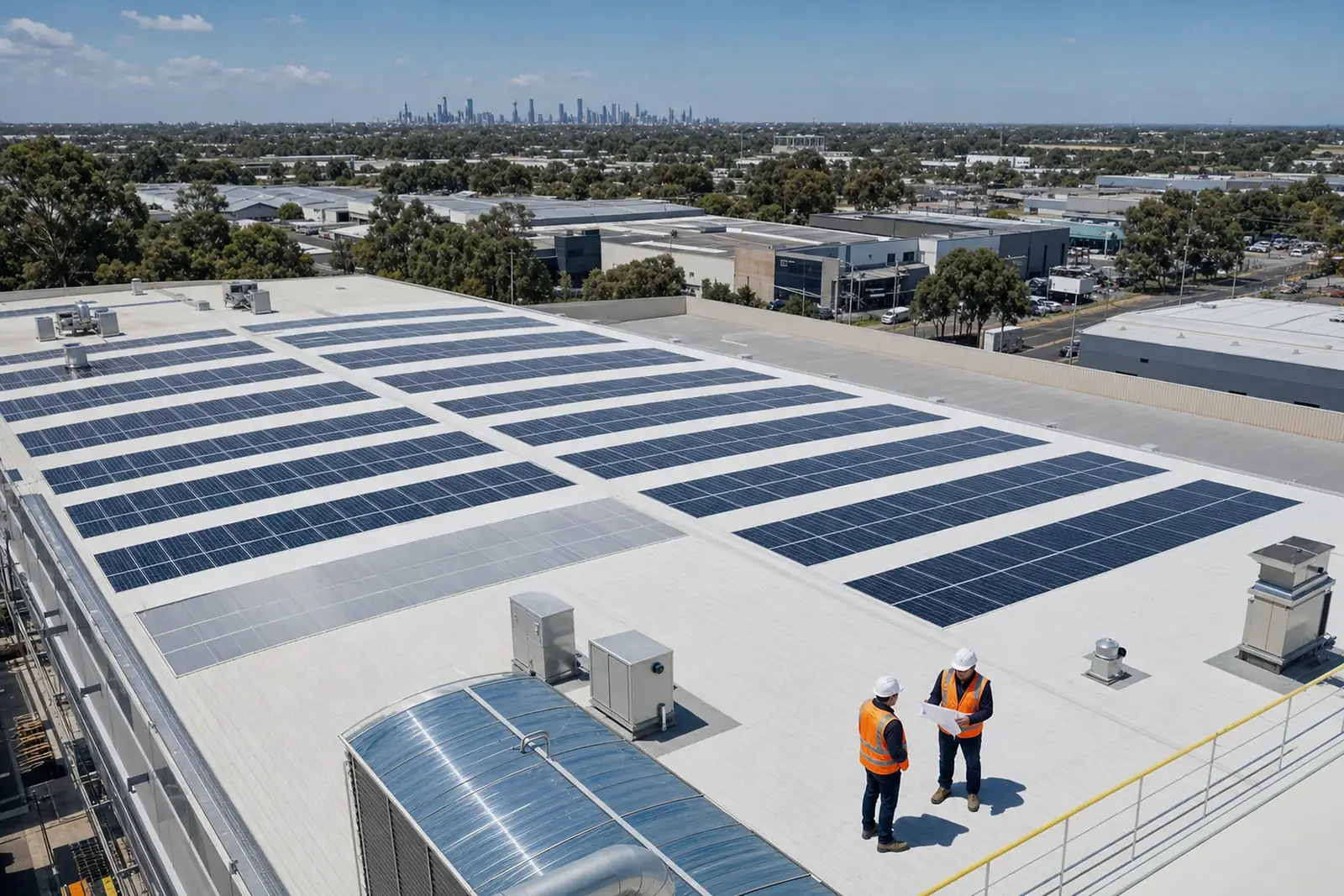
Flat concrete and tilt-up roofs use ballasted or fixed mounting with tilt frames to angle the panels for the best output.
These roofs often have plenty of unshaded space, which makes them ideal for larger arrays.
We check the structure can carry the load, then choose ballast or fixings to suit the building.
- Ballasted frames weighted down without roof penetrations
- Fixed mounting bolted into the structure where needed
- Tilt frames set to the best angle for year-round output
- Generous unshaded space that suits a larger array
Membrane and flat roofs
Membrane roofs, common on newer commercial buildings, need careful mounting so the waterproof layer is never compromised.
We use mounting designed for membrane systems and detail every contact point to stay leak-proof.
Done right, a membrane roof carries solar for decades without trouble.
Does roof age or condition matter?
A roof needs to last as long as the solar on top of it, so condition matters as much as type.
If a roof is near the end of its life, it can make sense to re-sheet before installing, rather than pull panels off later.
We assess the condition during the site visit and tell you honestly if any roof work should come first.
When a roof is not ideal
If a roof is too small, shaded or structurally limited, there are still ways to get solar onto your site.
Tilt frames and ground mounts open up options that a difficult roof on its own would not allow.
- Tilt frames to fix orientation and angle on a flat roof
- Ground mounts where land is available and roof space is short
- Carport-mounted arrays that double as covered parking
- Splitting the array across multiple roof sections
How we work out what suits your building
Every roof is different, so we never quote a mounting system without seeing it.
We assess the structure, orientation and condition during the site visit and recommend the cleanest, safest mounting for your building.
That way the system sits right, stays watertight, and produces what it should for the long haul.
What we check on a roof inspection
A good roof inspection is what keeps a solar install clean, safe and watertight for decades.
We are not just measuring the space, we are confirming the roof can carry the system and stay weatherproof.
These are the things we work through before specifying any mounting.
- Roof type, sheet profile and fixing method
- Structural capacity to carry the array and ballast
- Roof age, condition and remaining service life
- Orientation, pitch and any shading through the day
- Vents, skylights and obstructions to design around
- Safe access and anchor points for the install crew
Frequently asked questions
Does mounting solar damage my roof?+
Done properly, no. We use mounting matched to your roof type and detail every penetration to stay weatherproof. Many metal-roof installs need no penetrations at all.
Can I put solar on a flat roof?+
Yes. Flat concrete and membrane roofs use tilt frames to angle the panels correctly, and often have generous unshaded space for a larger system.
What if my roof is old?+
If a roof is near the end of its life, re-sheeting before installing can save pulling panels off later. We assess the condition first and tell you honestly if roof work should come first.
Can solar go on a membrane roof?+
Yes, with mounting designed for membrane systems and careful detailing at every contact point so the waterproof layer is never compromised.
What if my roof is too small or shaded?+
Tilt frames, ground mounts and carport-mounted arrays all provide alternatives. We can also split the array across multiple roof sections to make the most of the space you have.
Do you check the roof can take the weight?+
Always. We assess the structure during the site visit and choose a mounting and ballast approach that suits the building, so the roof safely carries the system.