AI overview
On 5 August 2026 the federal government announced that the Small-scale Renewable Energy Scheme will be expanded from 100kW to 1MW, which means commercial solar systems up to ten times larger can claim the upfront rebate instead of ongoing certificates. The government expects the change to cut install costs by around 20 per cent, worth about $68,000 on a 250kW system and $136,000 on a 500kW system. It is expected to commence from 1 October 2026, subject to the necessary regulations being in place.
Key highlights
- The rebate threshold goes from 100kW to 1MW, a tenfold increase
- Expected to commence 1 October 2026, subject to regulations being in place
- Worth roughly 20 per cent off the upfront install cost
- About $68,000 off a 250kW system, about $136,000 off a 500kW system
- Nothing is lost if you are under 100kW, that rebate continues as it is
- Network connection processes for mid-scale solar are being improved as well
Summarise with AI
Open this article in your favourite AI assistant for a quick summary and a local recommendation.
For years there has been a hard line through the middle of commercial solar in Australia. Systems up to 100kW got a simple upfront discount. Anything larger dropped into a different scheme with ongoing certificates, more paperwork and a much less appealing set of numbers.
That line is moving. On 5 August 2026 the federal government announced the rebate will be extended to systems up to 1MW, ten times the current limit.
For a lot of Gold Coast businesses this is the difference between a roof that half pays for itself and a roof that finally gets used properly.
What was announced
The Small-scale Renewable Energy Scheme, the same scheme behind millions of household solar installs since 2011, is being expanded to cover commercial systems up to 1MW.
Systems in that range currently sit outside it. Under the change they will earn small-scale technology certificates in the same way a smaller system does, delivered as a discount on the install price rather than as income over time.
The government put the value at around 20 per cent off the upfront cost of a medium-sized system.
- Current threshold: 100kW
- New threshold: 1MW, a tenfold increase
- Expected to commence from 1 October 2026, subject to the necessary regulations being in place
- Administered by the Clean Energy Regulator, as it is now
- Separate from any state-run programs
Why 100kW was the problem
A 100kW system sounds large until you put it on a real commercial roof. On a warehouse, a distribution centre or a decent-sized factory it covers a fraction of the available area and often a fraction of the load.
Climate Change and Energy Minister Chris Bowen described the gap directly: "One in three Australian homes have rooftop solar, but larger energy users have been locked out because the existing solar rebate only supports systems up to 100 kW."
The scale of the gap shows in the national figures. Australian homes have installed around 22 gigawatts of rooftop solar. Businesses have installed roughly 5.6 gigawatts, and most of that sits below the 100kW line.
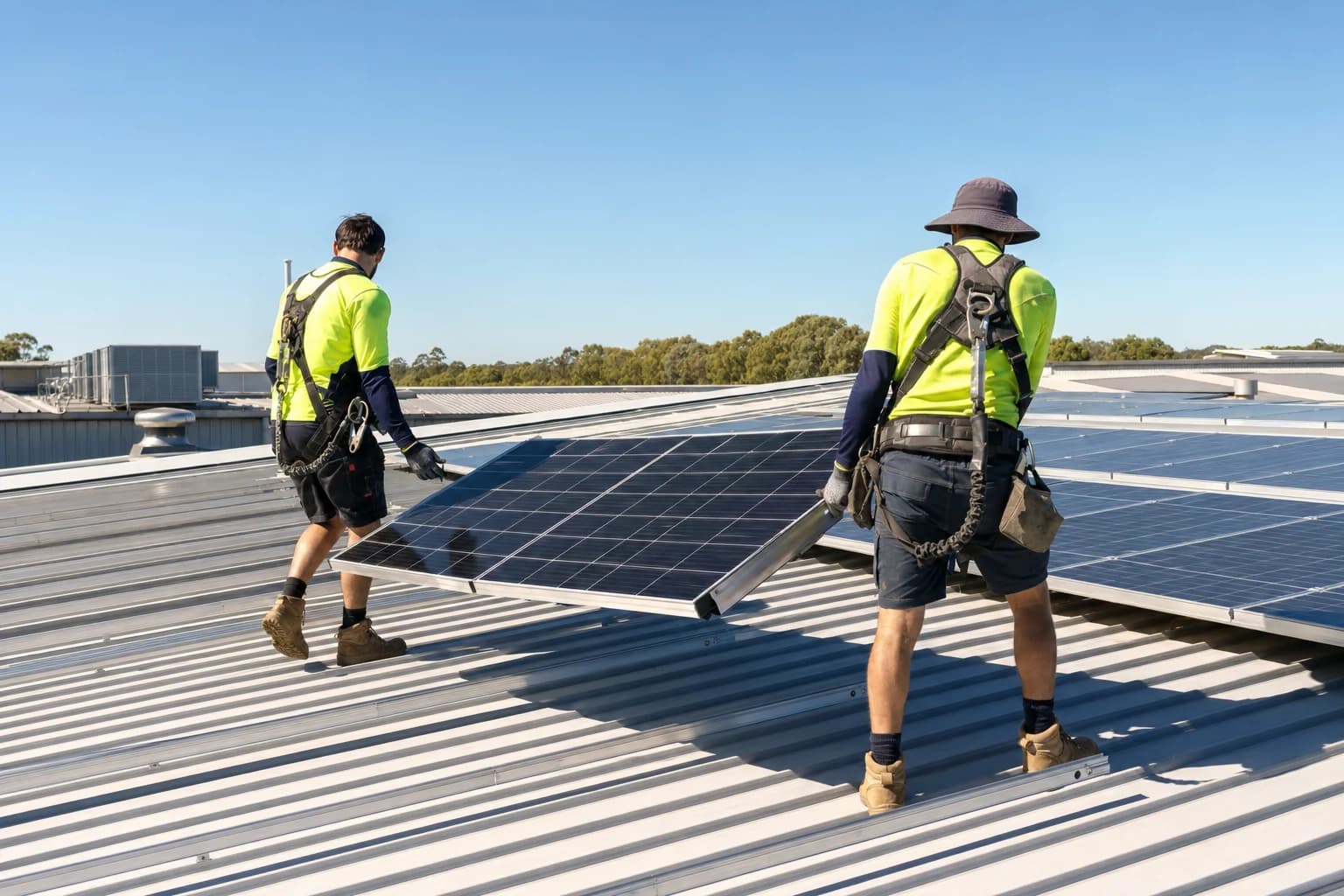
What it is actually worth
The government published worked figures for the sizes most affected. They are useful as a sense of scale, not as a quote, because the certificate value depends on the system, the zone and the market price on the day it is claimed.
On the generation side, the same release put a 250kW system at around 345 MWh a year, worth roughly $50,000 off an annual power bill. An 850kW system was put at around 1,173 MWh a year and roughly $175,000.
The upfront discount and the ongoing saving stack. That combination is what changes the payback period on a mid-sized system.
- 250kW system: about $68,000 off the install
- 500kW system: about $136,000 off the install
- 250kW generation: about 345 MWh a year, roughly $50,000 saved
- 850kW generation: about 1,173 MWh a year, roughly $175,000 saved
If you are under 100kW, nothing is taken away
This is worth being clear about, because an expansion is easy to mistake for a deadline. The rebate you can claim today on a system under 100kW is not being withdrawn on 1 October. It continues as it is.
What continues as well is the annual step-down. The certificate count is tied to the years remaining until the scheme ends in 2030, so it drops each January regardless of this announcement.
So the timing question for a smaller system has not changed. The timing question for a larger one has.
If you are above 100kW, this is the change to plan around
A business planning a 200kW, 400kW or 800kW system is the one this was written for. Today that system sits in the large-scale scheme, earning certificates over time rather than money off the invoice.
From the expected commencement it would instead attract an upfront discount, on the same mechanism your smaller neighbours already use.
If a project that size is on your list for this year, the sensible move is to get the design and the numbers done now and line the install up against the commencement date. Detail on how the current schemes work is in our rebates guide, and our incentives article covers how the certificate value is calculated.
Connections are being looked at too
Money is only half of what slows a mid-sized commercial project down. The other half is the network connection approval, which for systems in this range can take longer than the install itself.
The government said it will also work to improve connection processes for mid-scale solar through targeted rule change requests and improvements to the existing framework.
No timeline was attached to that part, so treat it as a direction rather than a date.
What to do now
The change is announced, not yet law. It is expected to commence from 1 October 2026, subject to the necessary regulations being in place, so the responsible thing is to plan for it rather than bank on it.
Design work, roof and structural checks, load analysis and network paperwork all take time and none of it depends on the regulations landing. Doing that now is what puts you in a position to act.
- Get your actual consumption data together, twelve months of interval data if you have it
- Have the roof assessed for the larger system, not the one that fit under the old cap
- Start the network conversation early, it is usually the long pole
- Ask any quote to show the certificate value separately, so you can see what changes
Frequently asked questions
When does the expanded rebate start?+
The government has said it is expected to commence from 1 October 2026, subject to the necessary regulations being in place. That wording matters. It is an announced change with an expected date, not a law that has already taken effect, so anyone telling you it is locked in is going further than the government has.
Does this mean the current rebate ends on 1 October?+
No. Nothing is being taken away. Systems under 100kW keep the rebate they can claim today, and the change simply extends the same support up to 1MW. The only thing that does reduce over time is the certificate count, which steps down each January until the scheme ends in 2030, and that has always been the case.
How much is it worth on a system my size?+
The government's own worked examples put it at about $68,000 off a 250kW system and about $136,000 off a 500kW system, or roughly 20 per cent of the upfront cost. The exact figure depends on the system that suits your roof, your STC zone and the certificate market price on the day it is claimed, so treat those as scale rather than a quote.
Should I wait until October to install?+
If your system is under 100kW there is no reason to wait, because that rebate is unchanged and the certificate value drops each January. If your system is over 100kW then the expansion is worth planning around, and the design, roof assessment and network approval work can all be done beforehand so the install can proceed once the regulations are in place.
What happens to systems over 1MW?+
They stay in the large-scale scheme and earn Large-scale Generation Certificates based on generation, as they do now. The expansion lifts the ceiling to 1MW, so it captures the great majority of commercial rooftops without changing how genuinely large-scale projects are treated.
Is this a Queensland scheme or a federal one?+
It is federal. The Small-scale Renewable Energy Scheme is administered by the Clean Energy Regulator and applies nationally, separate from any state-run rebate. Queensland does not currently run its own commercial solar rebate on top of it.